
SnoreStop Nasal Spray Safety Update: What Consumers Should Know
Snoring affects millions of adults and children, impacting both sleep quality and overall health. Over-the-counter products, including nasal sprays, are often marketed as snoring solutions to reduce nighttime noise.
This article provides a clear, fact-based overview of SnoreStop Nasal Spray safety update following the company’s voluntary product discontinuation. The goal is to present accurate information so consumers can make informed decisions.
SnoreStop Nasal Spray Safety Update
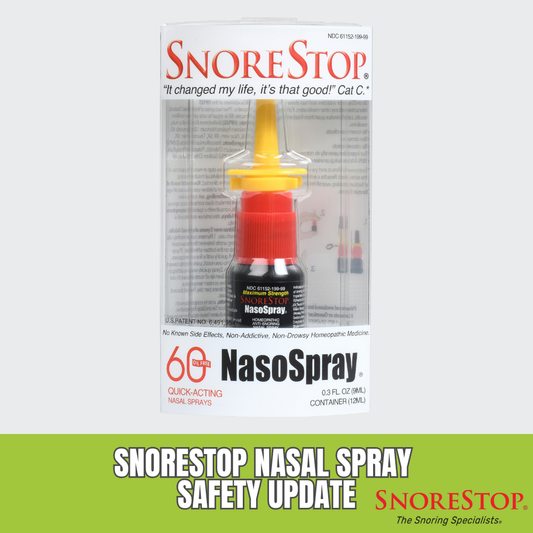
In June 2024, Green Pharmaceuticals Inc., the manufacturer of SnoreStop®, voluntarily recalled a single lot of SnoreStop® Nasal Spray after U.S. Food & Drug Administration (FDA) testing identified potential microbial contamination in that lot.
The company acted in cooperation with the FDA and ultimately decided to voluntarily discontinue the nasal spray product.
According to the public update:
- The nasal spray is no longer sold.
- The recall was voluntary.
- No adverse events or consumer injuries were reported in connection with the recalled lot.
- Manufacturing oversight and quality control procedures were strengthened.
The FDA issued a public advisory recommending that consumers avoid use of the affected product due to potential microbial contamination. Such contamination may pose infection risks, particularly for seniors, young children, or immunocompromised individuals. The bacteria identified is generally not harmful to healthy individuals but can present risks to vulnerable populations.
This action reflects a precautionary approach aligned with product safety standards.
SnoreStop Nasal Spray Reviews: What Users Reported
Prior to discontinuation, online reviews of SnoreStop Nasal Spray were mixed.
Reported consumer experiences included:
- Noticed reduction in snoring volume
- Experienced improved nasal airflow in users with nasal congestion
- Relief when snoring appeared related to nasal blockage
However, as with most over-the-counter sleep aids, outcomes varied significantly. Reviews are subjective and based on individual experience. They do not replace clinical evaluation or medical diagnosis.
It is important to note that snoring has multiple causes, including nasal congestion, structural airway narrowing, obesity, and obstructive sleep apnea (OSA). A product that may help one person may not work for another.
Health Perspective: Do Nasal Sprays Help With Snoring?
When Nasal Sprays May Support Respiratory Health
From a health standpoint, nasal sprays may offer benefit when snoring is caused by nasal inflammation, allergies, or congestion. By improving airflow through the nasal passages, vibration and airway resistance may be reduced.
Clinical research (not specific to SnoreStop) has examined nasal spray use in sleep-disordered breathing.
A randomized controlled study published in JAMA Pediatrics found that a saline (salt water) nasal spray was as effective as a steroid nasal spray in improving sleep-disordered breathing in children after six weeks. Approximately 40% of children showed improvement, and recommendations for tonsil or adenoid surgery were reduced by half.
These findings suggest that saline sprays may support respiratory health in certain cases under medical supervision.
When Nasal Sprays May Not Be Effective
Nasal sprays are unlikely to resolve snoring caused by:
- Obstructive sleep apnea
- Structural airway collapse
- Tongue obstruction
- Significant obesity
In such cases, evaluation by a healthcare professional is recommended to protect long-term health.
Safety Considerations for Nasal Spray Use
Product safety remains a primary consideration when evaluating any nasal spray.
Manufacturing and Quality Control
Consumers should:
- Confirm that products are manufactured in FDA-registered facilities
- Look for GMP (Good Manufacturing Practices) compliance
- Review company safety updates when available
The discontinuation of SnoreStop Nasal Spray reflects a precautionary safety decision following the identified contamination in one lot.
General Health and Usage Precautions
Even FDA-approved nasal sprays may cause side effects such as:
- Nasal dryness
- Mild irritation
- Nosebleeds
- Temporary discomfort
Improper or excessive use may increase risk. Individuals with chronic sinus conditions, glaucoma, hormone-sensitive conditions, or respiratory disorders should consult a licensed healthcare provider before using nasal sprays.
This information is provided for educational purposes and should not replace professional medical advice.
Balanced Review: Health, Safety, and Consumer Awareness
When evaluating SnoreStop nasal spray reviews and safety updates, several points are important:
- The product has been voluntarily discontinued.
- No reported consumer injuries were linked to the recalled lot.
- Reviews were mixed and largely anecdotal.
- Scientific evidence for over-the-counter lubricating snoring sprays remains limited.
- Nasal sprays may support respiratory health when congestion is the underlying cause.
- Medical evaluation is recommended for persistent or severe snoring.
Consumers should approach all over-the-counter health products with informed awareness and consult healthcare providers when symptoms persist.
Frequently Asked Questions (FAQs)
1. Was SnoreStop nasal spray unsafe?
A single lot was voluntarily recalled due to potential microbial contamination. No adverse events were reported, no customer was harmed, and the product was discontinued as a precautionary safety measure.
2. Can nasal sprays improve snoring and overall health?
Nasal sprays may help when snoring is caused by nasal congestion or sinus inflammation. They are not a treatment for obstructive sleep apnea.
3. What are the safety risks of nasal sprays?
Possible side effects include nasal irritation, dryness, and nosebleeds. Contaminated products may pose infection risks, particularly for vulnerable individuals.
4. Is saline nasal spray safe for children?
Research published in JAMA Pediatrics suggests saline nasal spray can improve sleep-disordered breathing in some children when used under medical supervision.
5. When should I see a doctor about snoring?
Seek medical evaluation if snoring is loud, persistent, associated with choking or gasping, or linked to daytime fatigue. These may indicate obstructive sleep apnea (OSA).
This article is for informational and educational purposes only and does not constitute medical advice, diagnosis, or treatment. Always consult a licensed healthcare professional regarding any medical condition.
Last Updated: February 2025