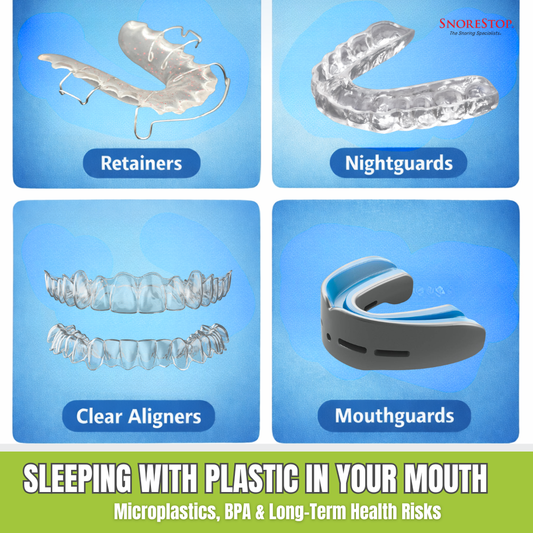
Sleeping with plastic in your mouth such as retainers, clear aligners, or mouth guards is common and often necessary for dental health. Millions of people use these devices every night to protect their teeth or maintain orthodontic results. However, new research on microplastics and chemical exposure is raising important questions.
Could sleeping with plastic in your mouth contribute to long-term health risks?
Emerging evidence suggests that long-term exposure to microplastics, chemical leaching (like BPA and phthalates), and bacterial buildup may have broader effects on the body. According to a recent large-scale review highlighted by a Stanford study microplastics have been detected in human blood, lungs, and even the brain. Researchers are actively studying how these tiny fragments influence inflammation and chronic disease.
Let’s break down what you need to know clearly, calmly, and backed by science.
Many people sleep with plastic dental devices, including:
-
Retainers
-
Nightguards
-
Clear Aligners
-
Mouth guards
These are commonly made from thermoplastics such as:
-
Polyurethane
-
Polypropylene
-
Acrylic resin
-
PETG (polyethylene terephthalate glycol)
While these materials are approved for dental use, they are still plastics, meaning they can degrade, wear down, and potentially release microscopic particles over time.
What Happens When Plastic Sits in Your Mouth for Hours?
Sleeping with plastic in your mouth typically means 6–8 hours of contact nightly. Over years, this adds up to thousands of hours of exposure.
During sleep:
-
Saliva remains in contact with the device
-
Mild heat from the body accelerates breakdown
-
Friction from grinding (bruxism) increases wear
-
Micro-cracks may form
These conditions can contribute to:
-
Microplastic shedding
-
Chemical leaching
-
Bacterial colonization
Let’s explore each one.
Microplastics are plastic fragments smaller than 5 millimeters many invisible to the naked eye.
According to research in the Stanford study scientists have found microplastics in:
-
Human blood
-
Lung tissue
-
Placenta
-
Brain samples
The concern? These particles may:
-
Trigger immune responses
-
Promote chronic inflammation
-
Cross biological barriers
How Dental Plastics May Contribute
Retainers and nightguards undergo:
-
Repeated cleaning
-
Constant moisture exposure
-
Mechanical stress
Over time, microscopic abrasion could release small particles. While large-scale studies on dental devices specifically are limited, the general evidence around microplastic exposure is growing.
Chemical Leaching: BPA and Phthalates Explained
Some plastics contain additives such as:
-
Bisphenol A (BPA)
-
Phthalates
These compounds can sometimes leach out, especially under heat and moisture.
Why This Matters
Both BPA and phthalates are considered endocrine disruptors. That means they may interfere with hormones such as:
-
Estrogen
-
Testosterone
-
Thyroid hormones
Hormones regulate nearly everything metabolism, mood, fertility, and immune function. Even small disruptions over long periods may have cumulative effects.
Modern dental manufacturers often advertise BPA-free materials, but not all plastics are identical. Long-term degradation remains an area of study.
Plastic surfaces can harbor bacteria if not cleaned properly.
When a retainer or nightguard isn’t thoroughly sanitized:
-
Biofilms form
-
Harmful bacteria multiply
-
Fungal organisms may develop
This can contribute to:
-
Gum inflammation
-
Bad breath
-
Increased oral infection risk
Chronic low-level inflammation in the mouth may also influence systemic health, as oral bacteria have been linked to cardiovascular conditions in broader medical research.
Potential Long-Term Health Effects
Now let’s connect the dots.
1. Endocrine Disruption
Long-term exposure to endocrine-disrupting chemicals (EDCs) may be associated with:
-
Hormonal imbalance
-
Fertility issues
-
Thyroid dysfunction
The research is still evolving, but endocrine disruption is a recognized mechanism in toxicology.
2. Chronic Inflammation
Microplastics and certain chemical compounds may:
-
Activate immune cells
-
Increase oxidative stress
-
Promote low-grade systemic inflammation
Chronic inflammation has been linked to conditions such as:
-
Type 2 diabetes
-
Autoimmune disease
-
Neurodegenerative disorders
3. Cardiovascular Concerns (Rare but Studied)
Recent investigations into microplastics have explored possible links to cardiovascular disease. Scientists are examining whether:
-
Plastic particles in blood vessels
-
Inflammatory markers
-
Plaque instability
could increase heart-related risks. However, direct causation is still under investigation.
4. Cancer Risk (Rare and Under Study)
Some plastic additives are classified as possible carcinogens. Long-term chemical exposure may increase cancer risk, but:
-
Evidence is still limited
-
Dental-device-specific studies are lacking
-
Risk levels likely vary by material
It’s important not to panic but awareness is wise.
How Significant Is the Risk?
Let’s be balanced.
Dental devices are:
-
FDA-regulated
-
Widely used
-
Clinically recommended
For many people, the benefits of preventing tooth damage outweigh theoretical risks. Severe teeth grinding can:
-
Crack teeth
-
Damage enamel
-
Cause jaw disorders
Untreated bruxism itself may cause inflammation and pain.
The current concern isn’t immediate danger it’s cumulative exposure over years.
Risk Comparison Table
| Factor | Short-Term Risk | Long-Term Consideration |
|---|---|---|
| Microplastic exposure | Low | Under investigation |
| Chemical leaching | Minimal with certified devices | Possible cumulative effects |
| Bacterial buildup | Moderate if poorly cleaned | Chronic oral inflammation |
| Cardiovascular impact | Rare | Emerging research area |
| Cancer risk | Rare | Not conclusively established |
How to Reduce Potential Risks
Here’s the good news—you can lower potential exposure.
1. Replace Devices Regularly
Old, worn retainers may shed more particles.
2. Clean Thoroughly
Use:
-
Antimicrobial tablets
-
Mild soap
-
Professional cleaning
Avoid harsh scrubbing that may increase micro-abrasion.
3. Ask About Materials
Discuss with your dentist:
-
BPA-free options
-
Medical-grade materials
-
Lab certifications
4. Store Properly
Keep devices dry when not in use.
Frequently Asked Questions (FAQs)
1. Is sleeping with plastic in your mouth dangerous?
Not necessarily. Dental devices are regulated and considered safe. However, long-term microplastic exposure is being studied.
2. Do retainers release microplastics?
They may shed microscopic particles over time due to wear, but more device-specific research is needed.
3. Are BPA-free nightguards safer?
BPA-free materials reduce one specific risk, but all plastics can degrade eventually.
4. Can bacteria from retainers affect overall health?
Poor hygiene can lead to gum inflammation, which has been linked to systemic health issues.
5. Should I stop wearing my nightguard?
No, do not stop without consulting your dentist. Untreated bruxism can cause serious dental damage.
6. Are there non-plastic alternatives?
Most dental appliances involve some form of polymer. Discuss emerging materials with a dental professional.
The Bottom Line: Informed, Not Alarmed
Sleeping with plastic in your mouth is common and often necessary. However, emerging research on microplastics, chemical leaching, and inflammation invites thoughtful awareness.
Current evidence does not prove that retainers or nightguards cause serious disease. But studies including those summarized by Stanford Medicine highlight that microplastics are entering the human body in ways we are only beginning to understand.
The key is balance:
-
Maintain oral hygiene
-
Replace devices when worn
-
Choose certified materials
-
Stay informed
Science evolves. As researchers continue investigating microplastic exposure, clearer answers will emerge.
Until then, awareness not fear is the smartest approach.