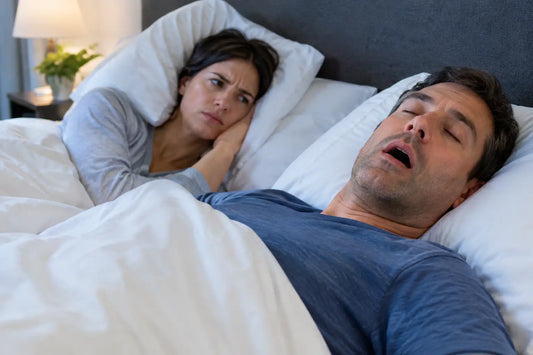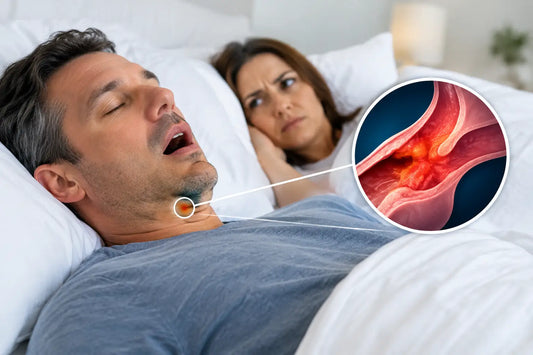
An elbow nudge at 2 a.m. may feel like a familiar couple problem. But if the snoring suddenly stops, followed by a gasp, choking sound, or long pause before breathing resumes, it may be time to look beyond ordinary snoring. Sleep apnea vs snoring is not simply a question of volume. The key difference is whether breathing remains steady through the night.
Many people who snore do not have sleep apnea. Their snoring may still leave a partner exhausted, cause dry mouth, or make a shared hotel room feel stressful. But sleep apnea is a medical condition that needs professional evaluation and treatment. Knowing the difference can help you choose the right next step - whether that means discussing symptoms with a healthcare provider or finding a simple approach for non-apneic snoring.
Sleep Apnea vs Snoring: The Core Difference
Snoring is the sound made when air moves past relaxed tissues in the upper airway, causing them to vibrate. It can happen occasionally after a glass of wine, during allergy season, or whenever someone sleeps on their back. For others, it is a more regular part of bedtime, much to the frustration of the person trying to sleep beside them.
Sleep apnea involves repeated interruptions or significant reductions in breathing during sleep. The most common type, obstructive sleep apnea, occurs when the airway becomes partly or fully blocked. The brain briefly wakes the person enough to restart breathing, often without them remembering it the next morning. Those repeated disruptions can affect sleep quality and, when untreated, may be associated with serious health concerns.
A person can snore loudly without having sleep apnea. A person with sleep apnea may also snore, but the snoring is often paired with pauses, gasping, choking, or daytime symptoms. Sound alone cannot provide a diagnosis.
What Ordinary Snoring Can Look Like
Non-apneic snoring is often linked to temporary or lifestyle-related factors. Relaxed throat tissues, nasal congestion, sleeping position, alcohol close to bedtime, fatigue, and natural changes in the airway can all contribute. Weight can also play a role for some people, but snoring affects people of many body types and ages.
The snorer may wake with a dry mouth or sore throat, while a bed partner may wake repeatedly from the noise. That disruption is real. It can lead to separate bedrooms, tension around bedtime, or anxiety before a trip or overnight stay with someone new. Still, if breathing is not stopping and there are no concerning symptoms, the issue may be uncomplicated snoring rather than apnea.
This is where a practical, comfortable routine can matter. Some people try nasal strips, mouth tape, chin straps, clips, or mouthguards, only to find them awkward, restrictive, or hard to pack discreetly. For non-apneic snoring, others prefer an approach that does not require wearing equipment overnight.
Signs That May Point to Sleep Apnea
Only a qualified healthcare professional can diagnose sleep apnea, often using a sleep study or home sleep test. But certain patterns deserve attention, especially if they occur regularly. Consider talking with a healthcare provider if you or your bed partner notice:
- Repeated pauses in breathing during sleep
- Gasping, choking, or snorting as breathing restarts
- Excessive daytime sleepiness, even after enough time in bed
- Morning headaches, trouble concentrating, or irritability
- Loud habitual snoring combined with high blood pressure or other risk factors
If a bed partner observes breathing pauses, that detail is particularly useful to share with a clinician. Many people with suspected sleep apnea do not realize what happens overnight because the brief awakenings are not fully remembered.
Why self-treatment is not enough for suspected apnea
Anti-snoring remedies are not treatments for sleep apnea. If apnea is suspected, a healthcare provider can help identify the cause and recommend appropriate care. Depending on the diagnosis and individual needs, treatment may include positive airway pressure therapy, an oral appliance prescribed by a dental professional, positional strategies, weight management, or other medical options.
It is tempting to look for the quickest fix when everyone in the bedroom is tired. But treating suspected apnea as ordinary snoring can delay care. The most helpful first step is not guessing - it is getting a proper evaluation.
What to Do if It Appears to Be Non-Apneic Snoring
When there are no observed breathing pauses, gasping episodes, or major daytime symptoms, a few changes may help reduce simple snoring. Side sleeping can make a difference for some people. Managing nasal congestion, avoiding alcohol close to bedtime, and maintaining a consistent sleep routine may also be worthwhile.
For habitual snorers, consistency matters more than an elaborate plan that is abandoned after three nights. The best approach is one that fits real life, whether you are at home, staying with family, or sharing a hotel room on a business trip.
SnoreStop offers a device-free option for adults with non-apneic snoring. Its oral sprays and chewable tablets are designed to work from inside the mouth and at the back of the throat, where relaxed upper-airway tissues commonly contribute to snoring. That means no taping, pulling, holding, or repositioning the mouth, jaw, or nose overnight.
The doctor-formulated products use natural-source active ingredients from plant, mineral, and protein sources and are prepared according to HPUS standards. They are FDA-regulated over-the-counter medicines manufactured in the United States under Good Manufacturing Practices. The studied SnoreStop Chewable Tablet formula was evaluated in an independent randomized, double-blind, placebo-controlled clinical study published in Sleep and Breathing. In that study, 79.5% of participants taking the formula reported positive results, with no side effects or drug interactions reported.
That research applies to the studied Chewable Tablet formula, not to sleep apnea treatment. If symptoms raise concerns about apnea, medical evaluation should come first.
A Bed Partner’s Observations Can Make a Difference
Snoring is often treated as the snorer's problem, but the bed partner may be the person losing the most sleep - and the one who notices the most useful clues. A calm conversation during the day is usually more productive than a frustrated conversation after another sleepless night.
Rather than saying, “You snore all night,” try being specific: “I have noticed a few times when you seem to stop breathing and then gasp,” or “The snoring is loud, but I have not noticed pauses.” This is not about blame. It gives both of you clearer information to decide whether to seek care or try a non-apneic snoring solution.
Solo sleepers can miss these signs, which is one reason daytime symptoms matter. If you regularly wake unrefreshed, feel unusually sleepy during the day, or have been told you gasp or stop breathing when sharing a room, bring it up with a healthcare professional.
The Right Goal Is Quieter, Safer Sleep
Not every snore is a medical emergency, and not every noisy night calls for bulky equipment. But breathing pauses, gasping, and persistent daytime sleepiness should never be brushed aside as just another annoying bedtime habit.
For suspected sleep apnea, seek medical guidance. For straightforward non-apneic snoring, choose a routine you can actually live with - one that helps make bedtime feel less like a negotiation and more like a chance for both people to rest.