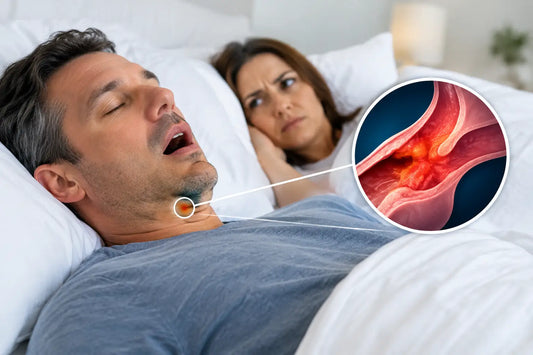
The third elbow nudge of the night is rarely about blame. One person is exhausted from being awake, the other may wake with a dry mouth and no idea what happened, and both are tired of treating bedtime like a negotiation. Natural remedies for snoring can be a sensible place to start for occasional or habitual non-apneic snoring, especially when you want relief that does not involve taping, strapping, or wearing something bulky overnight.
Snoring happens when airflow causes relaxed tissues in the upper airway to vibrate. That can occur behind the nose, in the mouth, or at the back of the throat. A stuffy nose, sleeping position, alcohol, dry air, and normal changes in muscle tone can all make those vibrations louder. The right approach depends on what seems to be driving the snoring in the first place.
Natural remedies for snoring start with the likely cause
There is no single natural fix that works for every snorer. A person who snores only during allergy season may need a different approach than someone whose partner hears it every night after two glasses of wine. The useful goal is to identify patterns, make a few realistic changes, and give each change enough time to judge whether it helps.
Clear nighttime nasal congestion
When nasal passages are congested, breathing through the nose becomes harder and mouth breathing often follows. For many people, that can make snoring more likely or more noticeable.
A saline nasal rinse or spray before bed may help wash away irritants and thin mucus. Managing known allergies, keeping pets out of the bedroom when needed, and washing bedding regularly can also reduce nighttime congestion. If you use a humidifier, keep it clean and use it as directed. Too much humidity can encourage mold, which may worsen allergy symptoms rather than help them.
Persistent congestion deserves a conversation with a healthcare professional. Structural issues, chronic sinus concerns, or medication effects are not problems that should be managed indefinitely with trial and error alone.
Change the position, not your whole bedtime routine
Back sleeping can allow the tongue and soft tissues at the back of the throat to settle backward, narrowing the airway and increasing vibration. Side sleeping may reduce snoring for some people without requiring a dramatic lifestyle overhaul.
A supportive body pillow can make side sleeping more comfortable and help prevent rolling onto your back. Raising the head of the bed slightly may help some people as well, although stacking several pillows under the head can strain the neck. Aim for comfortable alignment, not an elaborate pillow arrangement that leaves you sore by morning.
Reconsider alcohol close to bedtime
Alcohol relaxes upper-airway tissues, which can make snoring louder or more frequent. This is one of the clearest patterns many couples notice: the quiet night becomes the loud one after a late dinner, a celebration, or a nightcap.
Try finishing alcoholic drinks several hours before sleep, or skip them for a week and see whether the pattern changes. Sedating medications can have a similar effect, but never stop a prescribed medication without speaking with the clinician who prescribed it. They may be able to suggest safer timing or alternatives.
Support a comfortable weight when appropriate
For some adults, weight changes can contribute to snoring by increasing pressure around the upper airway. Gradual movement, balanced meals, and care from a qualified professional can improve overall health and may reduce snoring over time.
That said, snoring is not a character flaw and it is not limited to people of any one body size. Thin, active people snore too. Weight-focused advice is only useful when it is relevant, compassionate, and part of a broader picture.
A throat-focused, device-free option
Lifestyle changes can make a meaningful difference, but they are not always enough on their own. Many people also want something simple for the nights when they are sharing a hotel room, visiting family, starting a new relationship, or simply trying to spare their partner another interrupted night.
Oral sprays and chewable tablets offer a different approach from nasal strips, mouth tape, chin straps, clips, and mouthguards. Instead of holding, pulling, or repositioning the nose, mouth, or jaw, they are used in the mouth and at the back of the throat, where relaxed upper-airway tissues commonly contribute to non-apneic snoring.
SnoreStop has offered this device-free approach since 1995. Its doctor-formulated oral sprays and chewable tablets use natural-source active ingredients from plant, mineral, and protein sources, prepared according to HPUS standards. The products are FDA-regulated over-the-counter medicines manufactured in the United States according to Good Manufacturing Practices.
For people who have struggled to stick with an uncomfortable appliance, this distinction can matter. A solution only helps if you are willing to use it consistently. A small oral spray or chewable tablet can fit into a bedtime routine or travel bag without packing an embarrassing sleep device.
The studied SnoreStop Chewable Tablet formula was evaluated in an independent, randomized, double-blind, placebo-controlled clinical study published in the peer-reviewed journal Sleep and Breathing. In that study, 79.5% of participants taking the formula reported positive results, with no side effects or drug interactions reported. As with any over-the-counter product, follow the label directions and review the ingredients if you have allergies or questions about whether it is right for you.
Build a snoring routine you can actually keep
The best natural approaches are usually the least disruptive ones. Start with two or three changes that match your situation rather than attempting a complete sleep makeover overnight. For example, someone who snores after wine and sleeps on their back might try earlier drinks, side sleeping, and a throat-focused oral option for two weeks.
Keep the experiment simple. Ask a bed partner what they notice, or use a sleep-recording app as a rough reference if you sleep alone. Notice frequency, volume, dry mouth, morning headaches, and whether either person feels more rested. One unusually quiet night is encouraging, but a pattern over several nights is more useful.
Do not overlook the bedroom itself. A cool, clean room, a regular sleep schedule, and enough sleep can support better rest for both people. Being overtired may make snoring worse for some adults because the airway muscles relax more deeply. These habits will not solve every case, but they can make other remedies more effective.
Give the bed partner a role without making them the referee
Snoring affects two people when a bed is shared, but the solution should feel collaborative. The snorer may feel embarrassed or defensive after years of jokes and nightly nudges. The bed partner may be running on too little sleep and feel guilty for being frustrated.
A calm daytime conversation works better than trying to solve it at 2 a.m. Agree on a short trial, decide what success looks like, and check in after a week or two. Quieter nights can mean fewer nudges, less resentment, and more room for connection. It does not have to mean expecting perfect silence every night.
When snoring needs medical attention
Natural remedies are intended for ordinary, non-apneic snoring, not for diagnosing or treating sleep apnea. Seek medical evaluation promptly if snoring comes with pauses in breathing, gasping or choking during sleep, severe daytime sleepiness, morning headaches, difficulty concentrating, or high blood pressure. A bed partner may notice these signs first.
Children who snore regularly should also be evaluated by a pediatric healthcare professional. And if adult snoring begins suddenly, becomes severe, or does not improve despite reasonable changes, a clinician can help identify what is contributing to it.
A quieter bedroom is not a small thing. Whether you are trying to stop sleeping in separate rooms, feel more confident on a trip, or simply wake up without the familiar dry-mouth feeling, start with an approach that is comfortable enough to become part of real life.